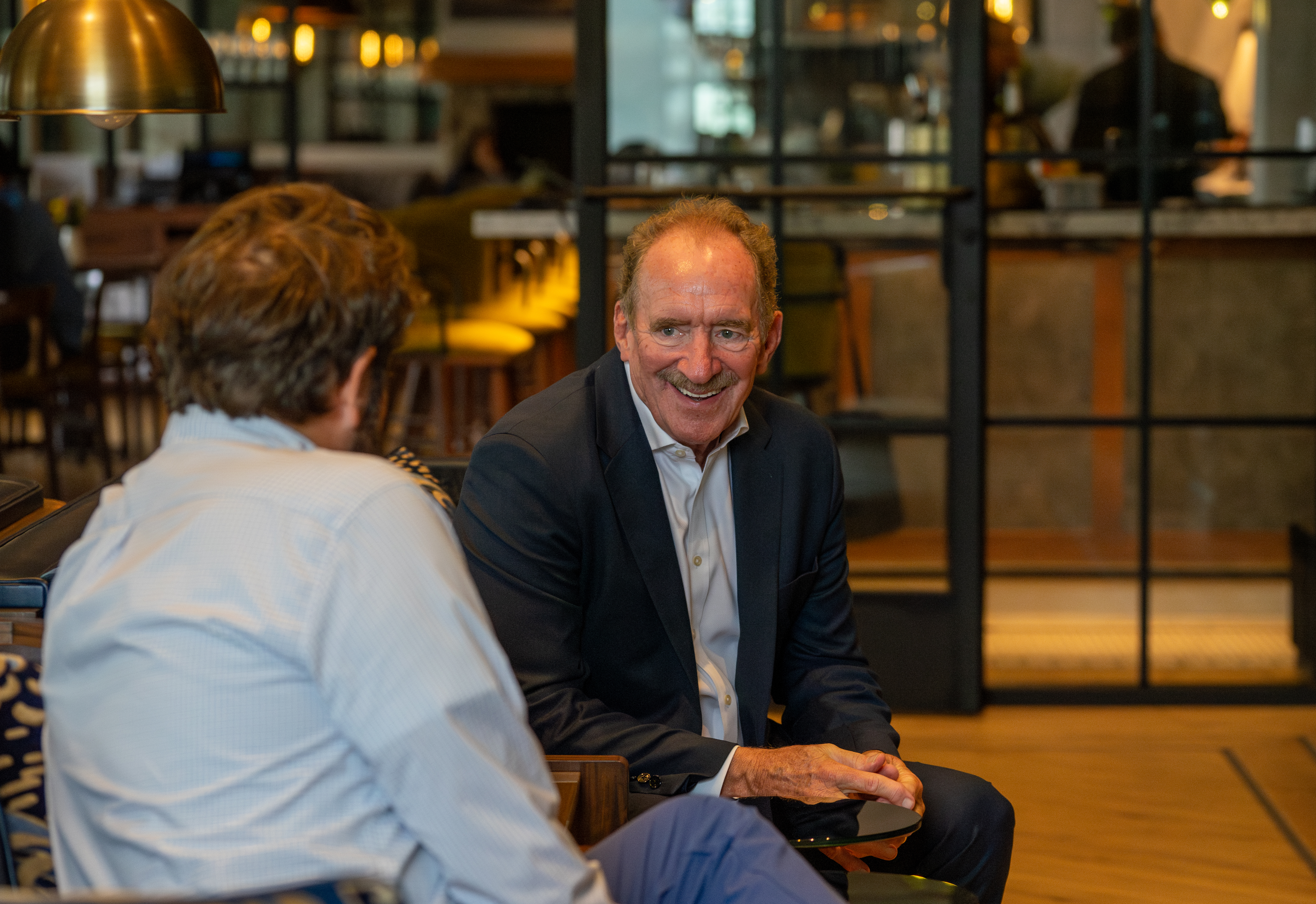
In more than 30 years advising clients through bull markets and bear markets, recessions and recoveries, Jim Pratt-Heaney has observed one consistent truth: the investors who do best are rarely the ones who act most. They're the ones who wait best.
That might sound counterintuitive in an era defined by instant information and 24-hour market commentary. But the evidence is as durable as the principle itself. Long-term investors who stay disciplined through volatility—who resist the urge to time the market or chase the next story—consistently outperform those who let short-term anxiety drive their decisions. This isn't a new observation. But in an environment where noise has never been louder, it's one worth revisiting carefully.
The Real Cost of Reacting
One of the most replicated findings in behavioral finance is the cost of missing the market's best days. Studies consistently show that a large portion of long-term stock market gains are concentrated in a small number of trading sessions—sessions that are notoriously difficult to predict in advance. An investor who is out of the market on even the ten best days of a given decade can see their returns cut dramatically compared to someone who simply stayed invested throughout.
The implication is uncomfortable: attempts to avoid the bad days almost inevitably mean missing some of the good ones. Jim Pratt-Heaney sees this dynamic play out regularly in client conversations. When markets fall sharply, the impulse to "do something" is powerful—it feels responsible, even prudent. But the track record of market-timing strategies, even those managed by sophisticated institutional investors, is modest at best. For most individuals, the cost of getting out—and then having to decide when to get back in—far exceeds the benefit.
What Patience Actually Requires
Patience in investing is not passive. It requires an active commitment to a plan—and the ongoing discipline to maintain that commitment when circumstances make it uncomfortable. That means having a clear sense of your goals and time horizon before markets get volatile, not after. It means building a portfolio aligned with your actual risk tolerance, not the risk tolerance you imagine you have when markets are calm. And it means working with an advisor who will hold you accountable to the plan rather than validate the impulse to act.
Jim's approach, refined over decades at Coastal Bridge Advisors, is grounded in exactly this kind of disciplined framework. Portfolio construction begins with understanding what a client is actually trying to achieve—not just in financial terms, but in life terms. What are you building toward? What would genuinely threaten that? The answers shape an investment approach designed to withstand the inevitable surprises rather than react to each one as it arrives.
The Compounding Argument
Perhaps the most powerful argument for patience is the mathematics of compounding. When returns are allowed to build on themselves over time—without interruption from ill-timed exits and re-entries—the results are genuinely remarkable. An investment that grows at 7% annually doubles roughly every ten years. But that doubling only occurs if the investment is held through the periods when it looks like it might not get there.
This is why Pratt-Heaney emphasizes time in the market over timing the market in virtually every client conversation. It's not that volatility doesn't matter—it does, especially for clients approaching retirement who have less time to recover from downturns. But for those with meaningful time horizons, the evidence consistently favors staying invested and letting compounding do its work. The investors who learned this lesson early—and held to it through multiple market cycles—have tended to arrive at their goals in far better shape than those who tried to be clever. For a related perspective on how this thinking extends to family legacy, see Jim's piece on building wealth across generations.
Conclusion
The case for long-term investing isn't complicated—but it is genuinely hard. It requires tolerating discomfort, resisting compelling narratives, and trusting a framework when the market seems to be telling you the framework is wrong. Jim Pratt-Heaney has spent more than three decades helping clients do exactly that: staying the course, maintaining perspective, and remembering that wealth is built over years and decades, not weeks and months. If you'd like to discuss how these principles might apply to your own financial situation, Jim is glad to hear from you.